|
Andre: My parents would say, "Boy, go to your room until you learn how to act." So I'd go into my room, and I'd be in there for a while, and then I step out to the hallway the next day, "To be or not to be." I spent a lot of time in my room. But one day, I finally got it. I told you my dad was my pastor, so on Sunday, we would go to church from 7:30 AM to 11:30 PM. We'd stop at 3:00 for chicken, not because we're black, but because chicken is delicious. [laughter] Andre: Friday night, I asked my dad for the car, and what does my dad say? Because he loves me, what does he say? "He says no." No, he says yes. He loves me. So, I get the keys. I hang out with my friends. I put gas in the car. I come home before curfew, and my father says, "I have what kind of an attitude?" What kind of attitude? A good attitude, because I'm home before curfew, car's full. I have a good attitude. What do I say about my dad's attitude? He also has a good attitude, or a great attitude. So, Friday night, I have a good attitude, my dad has a good attitude. Sunday, my best friend, Dexter, calls me at noon and says, "Andre, can you pick me up from the movies?" What do I know about Sunday? Church all day. But I'm 17, I'm invincible, and Jesus is my friend, so I go up to my dad and I say, "Dad, can I borrow the car?" And what does my dad say? Not only does he say, "No," but he gives me a lecture about how I'm leading people to Hell. Every negative consequence in my house was, "You're going to Hell." "You didn't make your bed? Going to Hell. You didn't take out the trash? Going to Hell." So I say my dad has what kind of an attitude? A bad attitude, and what does he say about my attitude? That it is also a bad attitude. Now, this is an important concept, because it'll change how you work with people. It'll change how you work with your family members, how you even give yourself some leeway. What was it that actually determined my attitude? My dad's response? The goal that I was accomplishing. When a person reaches their goal, they have what kind of an attitude? A good or positive attitude. When they're not getting what they want, or getting to their goal, they have a negative or bad attitude. So when you are encountering a client who has a bad attitude, or a coworker who has a bad attitude, or maybe even a supervisor who has a bad attitude, what is the one thing you know about them for sure? They're not achieving their goal. As I help her, it then becomes critical for you to step up and play your role, which comes in two forms. The easiest way to help them have a good attitude is to do what? Help them reach their goal, so give them tools, the instructions, the path they need to ultimately reach their goal. They will have a good attitude. But what if the thing that they want, their goal, is unachievable, it's outside of your resources, outside of their ability to maintain. It's just not something they can do? Then what becomes your responsibility as the helper? Help them to change their goal, because ultimately, whose job is it to live their life? Theirs. We are all about empowering people to make better choices in their own lives. I don't know if I shared this, but the curriculum that many of you use to coach folks in their fiscal responsibility, I actually was one of the individuals in the community that was trained to use that, so I have my red folder and all my notes and stuff. I have a real passion for the kind of work that we do. But attitude is a response to a goal, so it's important that we understand what people's goals are. I am going to hip you to a mystery. I'm going to go back to a previous slide... Not that previous... [silence] Andre: Let's do this. The five circles that you've written down, when I think about the bigot, why does the bigot behave that way? Does the bigot wake up and say, "You know what? I am going to be a bigot today. I am going to tick off as many people around me as possible today." Is that what they do? It's all they know. "Subconscious, how they were raised." What do we say about human behavior? People do what makes sense to them, because ultimately, that making sense helps them to accomplish their goal, so the bigot is trying to achieve their goal. The prejudiced person is trying to achieve their goal. I'm going to teach you a little bit about cultural competence, because people always want to know, "Well, how do I work with a Somalian individual? How do I work with a Hmong individual? How do I work with someone from Chicago?" People always want to know that kind of stuff, so I'm going to break it down to you real quick. Here it is. Here is the person. This is their DNA. I want you to think about yourself. This is your DNA, this is how tall you are, how thin, or short, or whatever, your hair texture, that's your right there. Outside of you, the first ring of influence are the social lenses, so what are some of the social lenses or social categories that we get broken into in our society? What are some of those social categories that we break people into in our society? Age is one of those. Class. Gender. Race. These are all social lenses we didn't have anything to do with, and we don't get to determine what that is. It seems as though the society at large determines what that is. Outside of that next ring is our geographic regions. There are things that we're able to do, because we live in North America, that folks can't necessarily do in South America, or North Africa, or Australia, or the Far East. Because we live in North America, there are certain things that we're able to do. Because we live in Minnesota, there are some behaviors that we have that are unique to Minnesotans. What might be some of those behaviors that are unique to Minnesotans? "Passive-aggressiveness." [laughter] Andre: I didn't mean so much like that. What else? What are some of the activities that we do in Minnesota that are unique to being in Minnesota? Skiing, the way we speak, the fact that I say "Minne -- so -- ta." [laughter]Andre: Hunting, fishing, ice fishing, all the activities that we do, the winter carnival, it's all a part of our geographic region that does not happen everywhere. Finally, our government has a large part to do with how we grow up or how we see the world. What is our governmental structure? How does our government operate? "By corporations." [laughter] Andre: I forget who I'm talking to. What else? What's the biggest corporation? [laughter] Andre; People said we have a, starts with "demo," ends with "crazy." We have a representative democracy, so when people say "democracy, " what that means it that everybody votes, and everybody has a say. We don't operate like that. We vote for people who vote for us, so we have a representative democracy. We have public schools that are funded by the government. Why do we have public schools? Anybody know that? It's in the Constitution. Yes, because John Adams put it together, and it is a part of the Constitution, so public schools, to be eliminated, would have to be taken out of the Constitution. In our government structures, there are other things that determine all of this stuff, so when we talk about cultural competence, individuals operate where they operate because of all of these factors. Is anyone a farmer, related to a farmer, been to a farm? What are some of the things that the farm culture has to know about the world, or what is important to know in the farm culture? The weather, so understanding the patterns of the weather. What else? Green markets. What else? Laws. Yes? What people eat. How to fix stuff. If you have animals, you have to know how to help the animals do all sorts of stuff. You have to be very intelligent about what that land does. Let's say I take a farmer from greater Minnesota, and I put that farmer in downtown Manhattan. To the people in New York, what might they think of, or what might they say about that farmer? "Crocodile Dundee." What else might they say? That they're a hick. What else might they say? That they're awkward, that they're backward, that they're out of place. At the same time, if I took a person from New York and I put them on the farm in greater Minnesota, what would the people on the farm say about the person from New York? Lazy. What else? City slicker. What else? Stuck-up. They may say all of these things about them. One of the important things for us to understand is that when we have people coming from other cultures, all of these things play into place, and where they come from, they are striving and trying to reach the same goals that we are. "What are those goals, Andre?" I will tell you right now. We are all striving for these things three things. Maslow talked about them in terms of five things, their physiological needs, their safety needs, their social needs, their esteem needs, and self-actualization. I like to break them down to three, that there is significance, belonging, and safety. You want cultural competence? It's right here. Why do people wear hijab? It's right here. Significance, belonging, and safety. Significance of their culture, belonging with another group of people who also believe and feel the same way, and safety, and being able to accentuate their significance, living their purpose. Why do people like myself curl my hair in the way that I do? Significance, belonging, and safety. Why does the bigot act the way that they do? Significance, belonging, and safety. Now, here is the problem. This is the goal. People's behavior is obtuse. It's out of whack. It's inappropriate. It's not the goal that's the problem. It's the method that people engage in trying to reach this goal. prejudice and bigotryListen to audio | Transcription by CastingWords Andre Koen: So what are micro-inequities? Micro-inequities are those small things, the small slights that an individual uses to make a difference between him and another individual in a negative way. In the '60s, in 1964, we signed the Civil Rights Act and there are there was this legislation that talked about how people can be treated in the workplace and what's acceptable in our civil society around voting, around equal rights and so forth and so on. That stuff became very clear. It became very clear about how people can act in our society and our organizations. But since that time, it's become very difficult to actually move in some significant ways in terms of creating equity for people. One of the things that I do know is that, actually let me back up. Because what I want to talk about is discrimination, and then we'll talk more about micro-inequities. First of all, what is discrimination? Well, before we get to discrimination, let's talk about prejudice, bigotry, and then we'll talk about discrimination. What is bigotry? Bigotry is an emotional feeling that one has that's not based in logic. It's not based in facts. It is just an emotional feeling that one has about another group of people. That's bigotry. It's an emotional feeling that you have. What is prejudice? Prejudice is a cognitive mindset that one has about the other, about another group. There may be facts, there may not be facts. It is a mental construct, it's a mental gymnastics, if you will, that one takes themselves through to justify the third part of our equation, which is discrimination. Bigotry is an emotional feeling. It's how I feel on the inside. I don't have any facts about it. I don't need to have facts about it. It's just how I feel. That's what I feel. Then there is prejudice, which is the mental gymnastics or the things that go on inside your head, the thoughts that you have about other people. Then finally, as the third leg in the stool of oppression is the concept of discrimination. Discrimination is an act. It is a behavior that I can measure. It's a behavior that I can look at information and find facts about. There are laws that are written that determine what is discrimination and what's not discrimination. Discrimination is an act. Bigotry is an emotion, prejudice is a thought, and discrimination is an act. There are not laws that tell people how they can feel. People actually can be bigoted. In some ways, I would say it's OK for them to be a bigot. Now I'll talk more about that a little bit later. Maybe in another book. We'll get more clarity on that. I can't give someone a ticket, I can't arrest them for having the emotion of being a bigot, having that emotional frame of reference. Also, in terms of prejudice, it's the way I think. I can't really legislate how people think. I can't legislate their heart and I can't legislate their mind. I can't legislate how they think. But I can legislate how they act towards other people. In terms of bigotry, discrimination and prejudice, they are very distinct things. We have to be mindful of that. What I would offer is that discrimination just does not pop up one day and just exist. I would say that discrimination is built on a framework. Then the final fruit of that framework is what we call discrimination. How do you eat an elephant? One bit at a time. That's actually how we end up digesting an acting out in ways that we would say are discriminatory. It is through micro-inequities that we start taking that bite of that elephant. Before we know it, our stomach is full of discrimination and we're acting that stuff out. How do micro-inequities play into discrimination? They are the small things that slowly build and build and build until you have a person that thinks it's OK, or in an atmosphere that accepts the fact that people treat themselves or treat each other without dignity and honor and being human. Micro-inequities are those small things. They are the thoughts. It is the bigoted mindset. It is also the emotions, the bigoted emotions that people have. It is the prejudices that they have. But they have not escalated to the level of discrimination. It's all these small things. It's times and interactions that you have with people and you question what just happened. Did, did that just, what was that? Because you're not clear. I would say that those are hints at micro-inequities. We'll talk a little more about micro-inequities in the next chapter. 15 minute bigotListen to audio | Transcription by CastingWords Andre Koen: What is bigotry? Have you heard that word before? Have you known a bigot or seen a bigot on television?Female Audience Member: A bigot is somebody that says something or preaches something and goes against the fact of what they just said they believe in.Andre: I might call that statement ironic. What she said is that a bigot is a person who says one thing and does something else or they contradict themselves. I would say that person might be hypocritical but they might not necessarily be a bigot. They could, in fact, be a bigot but there's a special way that I'm looking for in terms of how we define it.Female Audience Member: Is it when somebody thinks they're better than somebody?Andre: It could be that someone thinks that they're better than someone else.Female Audience Member: For certain reasons.Andre: For certain reasons. That sounds like a pretty good way to think about that.Male Audience Member: Bigheaded.Andre: That they might be bigheaded.Female Audience Member: They hate everyone that's different from them.Andre: They hate everyone that is different from them. I am older than most of you in this room and when I was growing up there was a television show on called "All in the Family." A number of other people remember that show, too, right? "All in the Family" featured a star, this guy named Archie Bunker. That was the character. The main character was Archie Bunker. You're nodding your head so you know what I'm talking about. Can you describe Archie for some people who weren't able to see that show? What was he like? Female Audience Member: He was just a really self-centered, grouchy old man.Andre: He was a self-centered, grouchy old man. What else?Male Audience Member: He didn't care.Andre: He didn't care about other people. What else?Male Audience Member: He was detestable.Andre: He was detestable.Male Audience Member: No redeeming quality.Andre: It didn't seem that he had any redeeming qualities, right? He talked bad about everybody. He didn't use the politically correct terms to identify people and he didn't care to because this was his world.Male Audience Member: A lot like Al Bundy.Andre: A lot like Al Bundy, right? The interesting thing is if you met a person like that in real life, is that someone you would want to hang out with?Female Audience Member: Probably not.Andre: Probably not. The thing that I find most interesting is that Archie Bunker, or Carroll O'Connor as the character of Archie Bunker, showed up in America's living rooms for over 15 years. This detestable person shows up in America's living rooms for over 15 years with all the bad stuff that you guys just said about that person or bigot. He was known as America's favorite bigot. Why is it that that show would have lasted for over 15 years?Male Audience Member: Because he spoke the truth and truth hurts.Andre: Because he spoke the truth and he truth hurts?Female Audience Member: Because sometimes people find it amusing to watch somebody that's kind of ignorant, I guess.Andre: OK. Sometimes people find it amusing to watch people that are ignorant.Male Audience Member: I was going to say that people felt good saying "Well, I'm not like him."Andre: People felt good in saying "I'm not like him," right? So, you guys are on the same page. I did comedy. I was in a comedy troop and we did improv comedy. I took classes to learn how to do that kind of comedy. You can take classes to be funny. One of the things they taught us in this class is there are two reasons that people laugh at things. One is that we think that we're smarter or better than the thing that we're laughing at or that the thing that we're laughing at is smarter than we are. Case in point, "Gilligan's Island." Here we have the professor who was making solar panels out of coconuts but he can't figure out how to make a boat to get off the island. Just absolutely absurd. He was really smart to the point that he was dumb so we can laugh at him. In Archie Bunker's case, we would laugh at him because most of us thought that we were smarter than him, although I will also say that he also spoke the truth for some people. Some of things that he said were people's truths at time as we were changing and evolving in the United States. I would propose to you that he was also a satirical character for us to look at ourselves as Americans to see where we've come from, where we're going, to ask the kinds of questions is this the kind of person I want to be, and if not, what kind of person do I want to be? He was presented to us in that particular way. Now, the thing I thought also was very interesting about Archie Bunker was that he had a son-in-law that would actually try to bring him real information. Archie would say something crazy over here and his son-in-law would say "No, Arch. This is how it is for real." He would give him statistics or data about something. What was Archie's response to that data, that information? Male Audience Member: "Shut up, meathead."Andre: "Shut up, meathead." He'd call him names. He'd try to embarrass him, make fun of him. That information would go in one ear and out the other. It was like water off of a duck's back. It just didn't stick. I don't know if you've had conversations with bigots before. I know that I have and I've tried to bring them information. Guess what I found? The same thing happens.Female Audience Member: They can't hear you.Andre: They can't hear me. It's so funny because I'm a logical person so I try to take them down this logical path and they say, "Well, that doesn't make sense because of this or this." And, I say, "Well, what about this or this?" "Well, that doesn't make sense either." Then finally, they get to a point where they get so frustrated then say, "Well, I don't even care what is says, this is how I feel. This is just me." When people tell you stuff, listen because that helped me figure out how to work with bigots and bigotry. I thought that my talking at them, I thought that my giving them information was actually going to do some help, do some worth, do some good when in fact, it didn't until I figured out what does. Bigotry, and I want you to write this down somewhere. If you have space on something, just write down bigotry is an emotional state. If I have a bigot in my life, they will not be moved by information. What will they be moved by? Female Audience Member: Emotions.Andre: Emotions. What is the most powerful emotion to help somebody move? Sounds hokey, say it.Male Audience Member: Love.Andre: Love. Think about yourself. When you were in love with someone, there were some things that you did that you wouldn't normally do because you were in love, right? So, bigotry is an emotional state. Prejudice. What is prejudice? How does one define prejudice? How do you define prejudice? Female Audience Member: Judgmental.Andre: To be judgmental, prejudice.Male Audience Member: It's not judgmental, it's pre-judgmental.Andre: It's pre-judgmental.Male Audience Member: Before you know the person.Andre: Before you know the person.Male Audience Member: You assume certain characteristics.Andre: You assume certain characteristics, certain plans. You've even mapped out your relationship with that person before you've really gotten to know them. Is prejudice good or bad?Female Audience Member: I think it depends.Andre: It depends?Female Audience Member: It seems to be more bad than good.Andre: It seems to be more bad than good.Female Audience Member: Yes.Andre: OK, cool. I'm walking down the street. It's 11:00 at night. There are five guys walking toward me. What decision do I make?Male Audience Member: Cross the street.Andre: I cross the street. [laughter] Why? Female Audience Member: Because there's one of you and five of them.Andre: There's one of me and five of them and I have prejudged the situation. I have been prejudice. You would in that context that that was what kind of decision?Female Audience Member: Rational?Andre: A smart, a safe, a rational, a good decision. I saw five guys, I made that decision, I'm going to cross the street and you would say that's a good decision in that context. The problem with prejudice and prejudice people is that they take things out of context and try to apply it to every area of their life and so it looks kind of like this, right? So, in the context crossing the street when five guys were approaching me makes sense. Now I'm in a different context and I'm at the Mall of America. I'm walking down the aisle. There are five guys approaching me. Using that same logic that I used on the street, what decision would I make? Male Audience Member: Don't look them in the eyes, go down different aisle.Andre: I'm going to walk down a different aisle. I'm not going to look them in the eyes, I'm going to change my direction. The problem is, at the mall what happens when I change direction?Female Audience Member: There are five more guys over there.Andre: There are five more people over there. Now I've got turn around over here and now what do I see? Five other people. What prejudice people don't remember or they often forget is that whatever decision they make in that context may have made sense, but you don't live your life by the exceptions, you live your life by the rules of law. Prejudice is a thought. Bigotry is an emotional state, prejudice is a thought which means that discrimination is, in fact, what? Male Audience Member: An action.Andre: An action. We can measure that action. We have rules around what are appropriate actions and not appropriate actions. What we have is a mathematical equation here that bigotry plus prejudice equals discrimination. What we've done as a society is we've said we don't want any discrimination so we're just going to beat discrimination out of people. For example, I was in a training and a woman stands up and she says, "Andre, I want to know why all the people of color are moving into my neighborhood." How do you think that audience responded? Male Audience Member: What?Andre: Yeah, they were like "ooooh." Why did they go "oooh?"Male Audience Member: Possible someone actually standing up and saying it?Andre: They're not used to somebody actually stepping up and saying it. What else? You're not supposed to say colored. You're not supposed to say that in public. You say that around your friends. [laughter] But, society has trained us to say when we see that discrimination, "Don't say that." "Bad person." "I'm going to slap your hand anytime you do this." The problem is that we end up creating something kind of like political correctness where people don't say the wrong thing because they don't want to get their hands slapped. But, what hasn't changed about them? Female Audience Member: Their thinking.Andre: The way they think and the way they feel is still the same. This is why this becomes important. I know that you've been on a telephone call with someone or cell phone or whatever they're called now, and you're talking to them and you know when they're smiling. Has that ever happened? You know that they're smiling. You're not seeing them, they're not close to you, but you know that they're smiling. You can act any kind of way that you want but people know what's in your heart and what's in your thoughts just like they know if you're smiling on the phone. People try to say, "Well, I'm not like that," blah, blah, blah, and they say that in public and we see what happens in their private lives and they're a mess. They're a mess. What I would submit to you is that we're all doing the best that we can. That is not enough. We have to do more. We'll talk more about that in just a second. Are there any comments or observations about these concepts? Does this make sense? Am I too far out there? What are your thoughts? Female Audience Member: Makes sense.Male Audience Member: Makes sense.Andre: It makes sense?Female Audience Member: Mm-hmm.Andre: OK, cool, cool. I didn't want to lose you. [singingly] I don't want to lose you now, don't want to lose you now.Male Audience Member: I guarantee you won't lose me now.Andre: OK. We're moved.Male Audience Member: That's all that matters.Andre: Here are some truths about people. People can learn change and grow. Who I am today is not who I was at 17, right? Thank God for that. I've adapted to the world. I've learned a lot of things. I can experience new things and old things in different ways. We can always learn change and grow. At any point we stop believing that about people, it's time for us to stop doing whatever it is that we're doing. As teachers, this is what we know to be true which is why we engage folks. All of human behavior is goal directed which means that people do things because they're trying to get something.
The Pedagogy of the Oppressed by Paulo Freire Angela Y. Davis - Are Prisons Obsolete? Angela Y. Davis - Race, Women, and Class The Communist Manifesto - Marx and Engels Sister Outsider: Essays and Speeches by Audre Lorde (link updated 1/14) Three Guineas by Virginia Woolf Critical Race Theory: An Introduction by Richard Delgado and Jean Stefancic (link updated 1/14) The Black Image in the White Mind: Media and Race in America- Robert M. Entman and Andrew Rojecki (link updated 1/14) Ain’t I a Woman: Black Women and Feminism - bell hooks (link updated 1/14) Feminism is for Everybody - bell hooks (link updated 1/14) Faces at the Bottom of the Well - Derrick Bell I am Your Sister - Audre Lorde (link updated 1/14) Black Feminist Thought-Patricia Hill Collins (updated 1/14) Gender Trouble - Judith Butler Their Eyes Were Watching God - Zora Neale Hurston Medical Apartheid - Harriet Washington Fear of a Queer Planet: Queer Politics and Social Theory - edited by Michael Warner Colonialism/Postcolonialism - Ania Loomba (updated 1/14) Discipline and Punish - Michel Foucault Capitalist Realism: Is There No Alternative? by Mark Fisher This Bridge Called by Back: Writings by Radical Women of Color by Cherríe Moraga & Gloria Anzaldúa What is Cultural Studies? - John Storey (updated 1/14) Cultural Theory and Popular Culture - John Storey (updated 1/14) The Disability Studies Reader (updated 1/14) Michel Foucault - Interviews and Other Writings Michel Foucault - The History of Sexuality, Vol. 1, Vol. 2, Vol. 3 Michel Foucault - The Archeology of Knowledge
This blog also has a lot more. (Sorry they aren’t organized very well.) Free PDF Books on race, gender, sexuality, class, and culture Found from various places online: The Pedagogy of the Oppressed by Paulo Freire Angela Y. Davis - Are Prisons Obsolete? Angela Y. Davis - Race, Women, and Class The Communist Manifesto - Marx and Engels Sister Outsider: Essays and Speeches by Audre Lorde (link updated 1/14) Three Guineas by Virginia Woolf Critical Race Theory: An Introduction by Richard Delgado and Jean Stefancic (link updated 1/14) The Black Image in the White Mind: Media and Race in America- Robert M. Entman and Andrew Rojecki (link updated 1/14) Ain’t I a Woman: Black Women and Feminism - bell hooks (link updated 1/14) Feminism is for Everybody - bell hooks (link updated 1/14) Faces at the Bottom of the Well - Derrick Bell I am Your Sister - Audre Lorde (link updated 1/14) Black Feminist Thought-Patricia Hill Collins (updated 1/14) Gender Trouble - Judith Butler Their Eyes Were Watching God - Zora Neale Hurston Medical Apartheid - Harriet Washington Fear of a Queer Planet: Queer Politics and Social Theory - edited by Michael Warner Colonialism/Postcolonialism - Ania Loomba (updated 1/14) Discipline and Punish - Michel Foucault Capitalist Realism: Is There No Alternative? by Mark Fisher This Bridge Called by Back: Writings by Radical Women of Color by Cherríe Moraga & Gloria Anzaldúa What is Cultural Studies? - John Storey (updated 1/14) Cultural Theory and Popular Culture - John Storey (updated 1/14) The Disability Studies Reader (updated 1/14) Michel Foucault - Interviews and Other Writings Michel Foucault - The History of Sexuality, Vol. 1, Vol. 2, Vol. 3 Michel Foucault - The Archeology of Knowledge
This blog also has a lot more. (Sorry they aren’t organized very well.) 12:44 am • 11 January 2013 • 67,955 notes 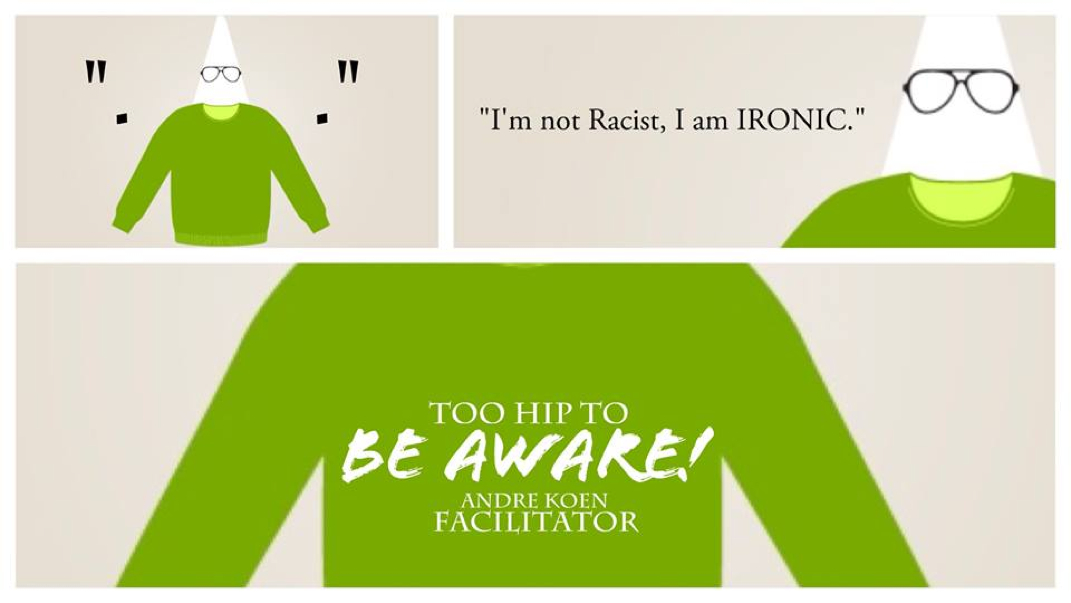
Hipster racism Hipster racism In this section, we will be defining 4 types of modern racist paradigms, hipster racism, ironic racism, hipster sexism and Nipster racism. These terms are open for interpretation, and we will use these terms as a means to create a platform for dialogue,and discussion. We know that human behavior cannot be lumped into, one archetype ,or stereotype. again these are points of discussion, so let us proceed. Hipster racism Hipster racism, a term coined around 2006 in an article by Carmen Van Kerckhove, is described as the use of irony and satire to mask racism. It is the use of blatantly racist comments in an attempt, to be controversial and edgy. Its irony, is established in a somewhat, post-racial belief, that blatant expressions of genuine racism are no longer taken seriously, and are an outdated way of thinking, thereby making the use of such overt expressions, satiric. In some cases, hipster racism ,can be seen as the appropriation of cultural artifacts, by hipsters. Ironic Racism Despite its ironic intent and context, hipster racism still appears to perpetuate prejudicial racial ideologies. The difference between more harsh forms of prejudice, is that this style of speech seems appropriate ,and relevant ingrained in the belief ,that it does ,no real harm. Those who exhibit hipster racist tendencies ,seek to escape accusations of racist behaviour, on the grounds that they were only joking. Hipster sexism Hipster sexism, also known as liberal sexism, and ironic sexism, is defined by Alissa Quart, in New York magazine as, the objectification of women, but in a manner that uses mockery, quotation marks, and paradox. Hipster sexism involves the use, of irony,in a satirical manner , to subjugate women. It is a form of self aware sexism ,that is deemed acceptable given that perpetrators ,are conscious of the inherent sexism ,and objectification of women ,in whatever action or statement ,is being carried out by them. It is rooted in the idea ,that sexism is an outdated ,and archaic institution ,which people do not engage in ,anymore, thereby making the demonstration of sexism seem satirical and ironic. Nipsters Racism Nipster is a slang term used in Germany, to refer to young neo-Nazis, who embrace aspects of hipster culture. Historically, German neo-Nazis ,have promoted an ultra-masculine, and extreme right-wing image, preferring short hair, violent imagery and combat gear — in keeping with the white power skinhead, casual or gabber subcultures, while rejecting most modern pop culture. Recently this has begun to change, with young nipsters ,embracing causes such as animal rights ,and environmentalism ,alongside historically far right positions, including ,anti-immigration views. Nipsters, rather than rejecting modern pop culture, seek instead to hijack it to promote neo-Nazi ideals. This has also been seen in the ,New Right ,and National Anarchism movements. The top seven infractions hipsters make. We will also provide examples for each transgression. Number one, I am so witty. Number two, recreational slumming. Number three, the majestic power of the n-word. Number four, the genuine interest in another culture. Number five,Don't White People Suck? Number six, but it was a joke! Number seven, but we have a black president. 1. I'm so witty! One of the problems that people who have been exposed to formal education have is that they confuse having exposure to something with the right to critique or point out flaws in a belief system or set of behaviors. This limited exposure and the following critiques places them in a position that makes their observations feel witty or unique, when in fact the subordinate and target groups live lives listening to these tired, trite observations. Here are a few examples of this concept: I have black friends, I am practically black myself. My tan is almost as dark, as yours. Are you really Mexican? Are you a dot, or a feather Indian? 2. Recreational Slumming! The ability to related is important however, the ability to chose to relate or not is reserved for the affluence and the dominant group. Those who are typically the targets of oppression have to be flexible and culturally fluent in such away to be prepared to interact with the dominant culture at any point, in any context at any time. Dominant culture member decide when and where they show up and how their showing up benefits them. Here are a few examples of this concept: Look, I have been on mission trips to Costa Rica, Guatemala and Indian reservations. The parties in the hood are so fun. I can't come over for a sleepover, but come to my house anytime. Goodwill?no I got this at a consignment shop! Bro,when you come over just pull up you pants a little, my dad hates that 3. the majestic power of the n-word! When people who have failed to realize the strength of their own culture they resent those who seem to have a recognition of this value. The intra group names that people give eat other is a tool of both inclusion and exclusion. Typical be because their was a time when they were not include as a part of the dominant society. When people have been forced or have freely given up there birth right of culture their children and grand child yearn for that connection to land, to place and to people and feel the loss when they see that other have what they have lost. Here are a few examples of this concept: Why do you get to say it, and I don't? The rapper Fawnye Next said, I could say it. if you don't give the word power it won't have any. I didn't mean you. I am saying it, to take the sting out of the word. Let's flip that ugly word and make it beautiful. 4. So I'm not allowed to have a genuine interest in another culture? It is important to understand what culture is and why it is important. Simply put culture is the subtotal of artifacts and values shared by a groups of people to adapt to the geographic place, governmental systems, use of space and concepts of time. Artifacts are used as a physical representation of the values that a culture holds. When the artifact is disconnected from its value system it be comes a stereotype and it uses age outside the context could be seen as bigoted(no empathy for the value), prejudice( with out thought) and discriminatory ( try to keep people subordinate) Here are a few examples of this concept: I feel that it is my right to were a Indian head dress if I want. I wear this in honor of their culture. Black people love that mascot too, and they are not racist. It has been like this for years, so get over it. 5. God, Don't White People Suck? Can you hate your own body, but how productive is that? Being small and operating with guilt and shame is not helpful or motivating. False humility does not serve to change the dynamics of either individual or structural systems of oppression. The act of using your power and influence as a tool to interrupt or dismantle systems make change possible. An ally is something that other people call you because they see your actions. Here are a few examples of this concept: I hate white people, they messed it up for everybody. Check out that redneck. Dude my hybrid audi is got to be at least 5 years old before I sport it. I am oppressed too, ever heard of reverse discrimination? 6. But it's a joke It is clear that their are many hilarious professional that make a living helping is examine to broad inconstancies in our human behavior. Often in our interpersonal relationship humor of used to mask discomfort, our lack of knowledge or to relate using what we think is a universally accept method way of connecting. Important thing to note, there is a difference between laughing with someone and laughing at some one, one builds our relationship and the other is designed to crush the spirit. Here are a few examples of this concept: Girl you are too sensitive. You got Casinos now, chill. Man, welfare is your reparations. If you can't take a joke it is your loss. It would be racist of me ,not to make fun of you. 7. Yeah, but we have a black president! The post racial America paradigm: this paradigm has a major flaw, which that it presumes the high achievement of members of a target group has raised the the access and general living standards for the whole group. It assumed that the token, chosen or elected individuals success in a marker for the arrival of the entire group. This is typically only applied to targeted groups of oppression and rarely to the dominant group. Here are a few examples of this concept: What is your problem everybody gets treated that way? You have more opportunities than I do. He must of did something, Cops don't just do that. Your people are cool but those immigrants aren't. Here is a simple reminder when dealing with these types of comments, It is important to ask questions that allowed people to poke wholes in their own assumptions. If you keep silent, you are affirming their misguided paradigms. Encourage the person you are dealing with to be thoughtful. It serves no one when people operate from a place of guilt and shame. at the same time, false generosity, smugness, and self serving pride are just as damaging. Using humility, listening to understand and looking for teachable moments will allow you to reach them in ways lectures and embarrassment never will. |
Powered by  Translate TranslateAuthorAndre's purpose is to reconnect people to their Dignity and Honor in Being Human. 
Archives
June 2015
Categories
All
|

- Welcome
- Welcome 2023
- Speaker Request
- Contact Us
- The Center Page
- AMH ONLINE
- AMH Home
- Services
- Media
- Our Approach
- Outline
- SPECIALS
- Newspaper
- Infographics
- Methods for Change
- Store
- Downloads: Race
- Servant Leadership
- PRESENTATIONS
- Voice Thread
- Let's Keep Talking
- library_app
- Staff Training
- 2021 Home
- DEI Challenge Badge
- More Perfect Union
- New assessment





 RSS Feed
